


By Nomonde Mafu
Despite its recent streaks of torrential rains and scorching heatwaves, Eswatini has been ranked 157th out of 193 countries in the newly released World Risk Index 2024, placing it in the category of nations with very low disaster risk.
This classification, which appears comforting on the surface, reveals a more complex picture of vulnerability, resilience, and readiness in the face of rising global climate threats upon closer examination of the index’s components.
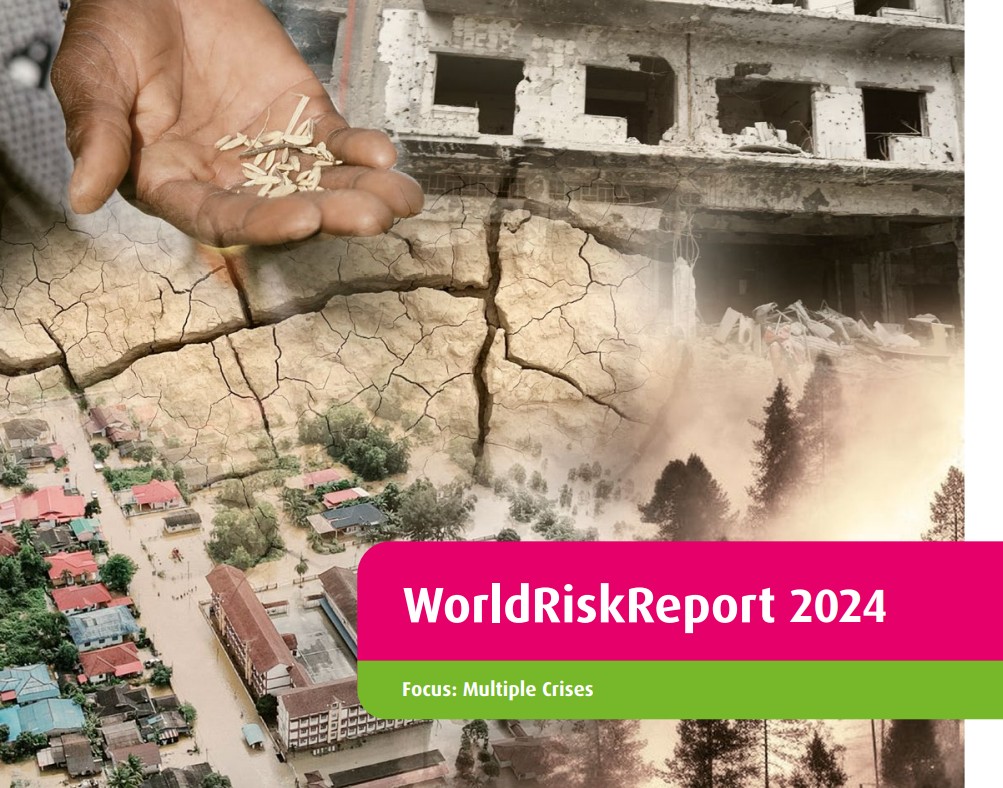
The World Risk Index, which is a part of the World Risk Report 2024 published by Bündnis Entwicklung Hilft and the Institute for International Law of Peace and Armed Conflict at Ruhr University Bochum, measures disaster risk based on two major factors; a country’s exposure to natural hazards, and its vulnerability, which includes susceptibility, lack of coping capacity, and lack of adaptive capacity.
With an overall risk score of 1.93, Eswatini has been placed toward the safer end of the global scale. For comparison,
the Philippines tops the index with a risk score of 46.91, while Monaco ranks at the bottom with a score of 0.18. However, low exposure to natural hazards is a major reason for Eswatini’s ranking, rather than its strong disaster readiness or societal resilience.
According to the report, Eswatini’s exposure score is 0.14, indicating a very low probability of extreme weather events such as earthquakes, coastal flooding, or cyclones,
which are hazards that plague many high-risk countries like Indonesia and Mozambique.

However, the narrative shifts when considering vulnerability. Eswatini has a vulnerability score of 26.70, placing it in the medium category. Its susceptibility score stands at 29.72, its lack of coping capacity at 13.23, and its lack of adaptive capacity at 48.42.
The report concludes that the high adaptive capacity gap is particularly concerning, signalling potential weaknesses in long-term climate response strategies,
including governance, education, healthcare infrastructure, and technological innovation.
This suggests that while Eswatini may not be frequently hit by disasters, its systems and communities may not be well-equipped to handle the consequences if or when they do strike.
The report also highlights that there is a hidden risk behind the ‘low risk’ label. Experts warn that interpreting Eswatini’s low overall risk score as an all-clear signal could be dangerously misleading.
“The World Risk Index clearly shows that countries like Eswatini, though low in exposure, remain vulnerable due to limited coping and adaptive capacities,” explained Dr. Katrin Radtke, scientific lead of the report.
“A single major shock, such as a prolonged drought or cross-border epidemic, could have disproportionately damaging effects.”
Also, the study brought to the surface that Eswatini’s vulnerability is closely tied to systemic development challenges.
These include healthcare access, reliance on external aid, HIV prevalence, and food insecurity, which are all indicators that appear in the index’s vulnerability subcategories.
In a region already grappling with economic strain and climate variability, these structural weaknesses could amplify the impact of even moderate environmental stressors.
Eswatini, like many Southern African nations, is no stranger to prolonged dry spells and erratic rainfall patterns.
Although it is not currently among the countries most exposed to hazards, the rising frequency of regional droughts linked to El Niño events could shift its risk profile quickly.
Health systems are another concern. While Eswatini has made notable progress in tackling HIV/AIDS and tuberculosis,
the country’s healthcare capacity remains strained, especially in rural areas, highlighting the significance of the 48.42 score in the lack of adaptive capacities.
The index also factors in governance indicators such as the rule of law, political stability, and corruption control,
which are all critical to emergency preparedness and climate adaptation funding. Any shortfall in these areas diminishes a country’s resilience in the face of disaster.
The index serves as both a warning and a roadmap. It urged countries like Eswatini not to be complacent with their low disaster exposure, but to invest now in adaptive infrastructure, education, public health, and early-warning systems.
The index concluded that climate finance opportunities, such as the Africa Minigrids Program, which Eswatini has already tapped into,
offer promising avenues for enhancing resilience. Continued investment in renewable energy, disaster risk education, and cross-border cooperation would be key to maintaining and improving Eswatini’s relative safety.
Worth noting is that this index has been published at a time when the National Disaster Management Agency (NDMA) of Eswatini is championing the strengthening of Eswatini’s drought resilience.
Post the destructive El Nino-induced drought, which saw the ‘death’ of agriculture in most parts of Eswatini, the NDMA has applied ‘Nkwe’ by initiating the first Draft Risk and Response Management Policy of 2025
The Drought Risk and Response Management Policy of 2025 seeks to strengthen Eswatini’s resilience to drought through comprehensive risk reduction, preparedness,
response, and recovery measures. Ongoing discussions to finalise the draft policy focus on key areas such as institutional arrangements, resource mobilisation, capacity building, and inter-agency coordination.
NDMA Chief Executive Officer (CEO) Victor Mahlalela said drought was the highest hazard in Eswatini.
“Water is primary in Eswatini because the economy is agro-based. We have an agro-economy.
The point of this workshop is to deal with drought as a risk, a huge hazard. Everyone here has a role to play because drought is a catastrophe that affects every citizen of the country.
We warmly welcome strategies in dealing with drought effectively and immediately as it emerges,” said the CEO.









Leave a Reply